
The Short Answer
Most loud garage door openers can be quieted in an afternoon with the right lubricant, a few tightened bolts, and new rollers. If the noise is coming from an old chain-drive opener that's been grinding away for a decade, no amount of oil will truly fix it — at that point, a belt-drive swap is the real answer. Everything in between is a judgment call, and this guide walks you through it in order, cheapest and easiest first.
Why Openers Get Louder Here Than Elsewhere
Salt air off the coast and the thick humidity that sits over this part of Manatee County most of the year speed up corrosion on hinges, rollers, and tracks faster than you'd see inland. Metal parts rust, wood-composite panels swell and shift slightly in their frames, and hardware that was snug in January can work itself loose by summer as the door expands and contracts with heat and moisture. A door that was whisper-quiet during installation can pick up a rattle, squeal, or grinding sound within a couple of seasons if it isn't maintained — and after a season of hurricane-driven wind load flexing the door and track, that noise often shows up right around now, in the fall.
Tools You'll Need
- Socket wrench or ratchet set
- Garage door lubricant (silicone or lithium-based spray — not WD-40, which attracts dust and grit)
- Clean rags
- Level
- Work gloves and safety glasses
- Replacement nylon rollers (if needed)
- Rubber anti-vibration pads (if isolating the motor unit)
Step-by-Step: Quieting Your Opener
- Tighten every bolt and screw. Unplug the opener first. Go along the track brackets, the motor unit mounting bolts, and the hinges on each panel with a socket wrench. Loose hardware is the single most common cause of rattling, and humidity-driven expansion loosens it faster here than in drier climates.
- Lubricate the moving parts. Spray a garage-door-specific lubricant on the rollers, hinges, and the track itself. Wipe off the excess with a rag so it doesn't collect dust. Do this every three to four months in this climate — salt air and moisture dry out factory lubrication quicker than most manufacturers' schedules assume.
- Check the rollers. Open the door partway and look at each roller as it moves through the track. Cracked, flat-sided, or metal rollers that have gone dry and are grinding metal-on-metal are a top source of noise. Nylon rollers run significantly quieter than steel ones and handle the swelling and contracting of a humid garage better.
- Inspect the track alignment. With the door closed, hold a level against each track. If a track has pulled away from the wall or shifted out of plumb, the rollers will bang against it on every cycle. Minor gaps at the brackets can sometimes be snugged back with a wrench.
- Isolate the motor unit. If the noise seems to come from vibration traveling through the ceiling joists rather than the door itself, rubber isolation pads between the opener's mounting bracket and the ceiling can cut down a surprising amount of hum and rattle.
- Check the chain (if you have a chain-drive opener). A chain that's too loose will slap against the rail with every open and close. Most openers have a tensioning nut near the sprocket — follow the manufacturer's spec, since over-tightening puts extra strain on the motor.
- Consider a belt-drive swap. If you've done all of the above and the opener is still noticeably louder than it should be — or if it's an older chain-drive unit nearing the end of its life — a belt-drive opener is the long-term fix. Belts run quieter by nature, hold up well in coastal humidity, and don't suffer the metal-on-metal fatigue that chain drives do.
What's DIY and What Isn't
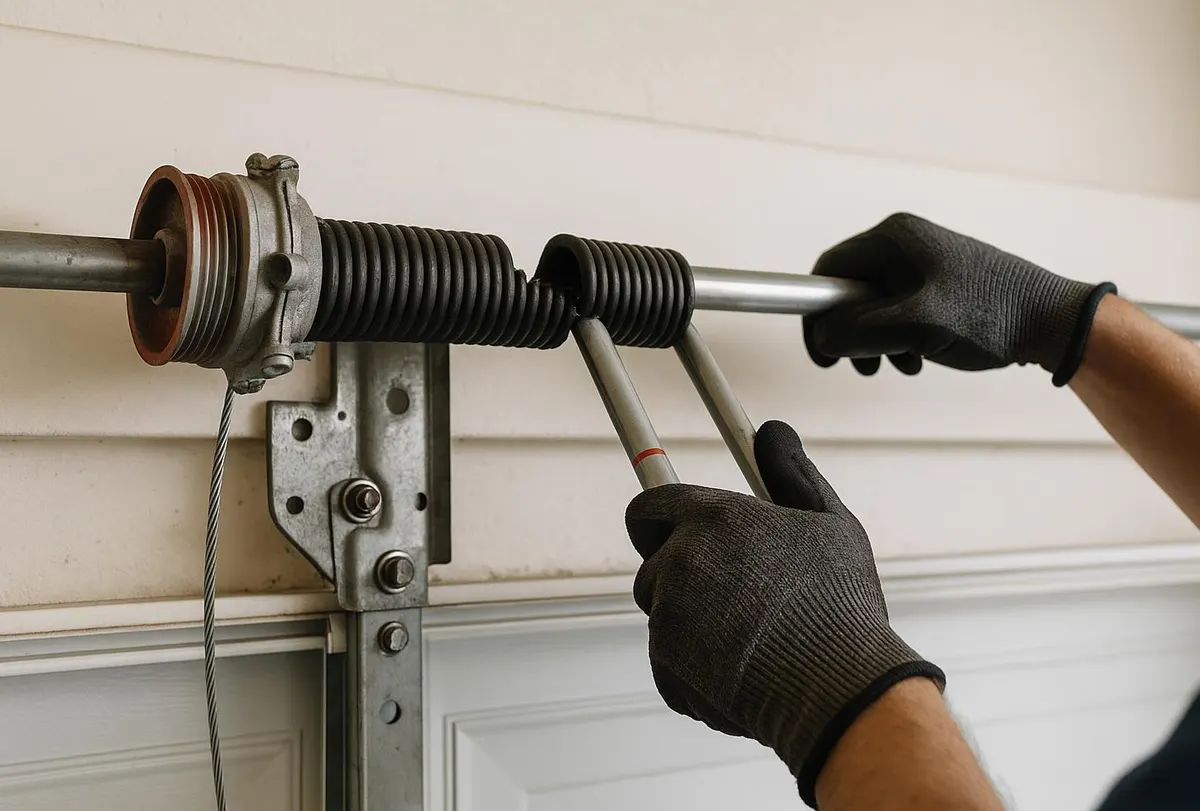
Tightening hardware, lubricating parts, and even swapping out worn rollers are reasonable weekend projects for a homeowner with basic tools and some caution around the spring-loaded parts of the system. Where it crosses into technician territory: anything involving the torsion spring, cable tension, track realignment beyond a minor bracket adjustment, or a full opener replacement. Garage door springs store enough energy to cause serious injury if handled wrong, and a belt-drive swap usually means re-programming safety sensors and travel limits correctly — get it wrong and you end up with a door that reverses unpredictably or doesn't seal properly against wind-driven rain.
When to Call Terra Ceia Garage Door Service
If you've tightened what you can reach, sprayed lubricant on everything that moves, and the door is still grinding, slamming, or shaking the house every time it opens, it's time for a second opinion. Our Garage Door Maintenance & Tune-Up service covers the full inspection — track alignment, roller condition, hardware torque, and spring balance — that's hard to do thoroughly on your own. If the rollers or cables are visibly worn, we can handle Garage Door Cable & Roller Replacement safely, and if you're ready to move off an aging chain-drive opener for good, we'll install a belt-drive system sized correctly for your door and sealed against the coastal humidity.
If your garage door is driving you up the wall every time it opens, give Terra Ceia Garage Door Service a call — we serve Terra Ceia and the surrounding Manatee County area, and we're happy to track down the noise and fix it right the first time.